Pl. Todor Kirkov 36
Lovech 5500 / Bulgaria
N PK-01-8013
E-mail : info@karistour.com
Tel. +359 890 161 600


BULGARIAN EMBROIDERY
is used exclusively for dress decoration. It is geographically differentiated depending on decoration, execution, color and composition. Typical features of embroidery, however, are plant and geometric patterns and their skillful technical fashioning. The artistic effect is achieved mainly through the interplay of colors. As in the case of folk songs, the rhythmic wealth is the result of arrangement and combination of hues: ranging from the soft shades of autumn gold, to the dark infusion of walnut leaves, from the pale shades to vivid color contrasts. Still, the red always prevails.
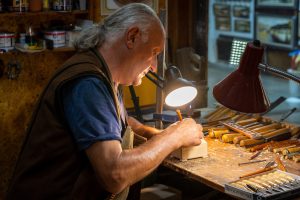
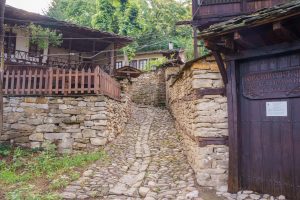
We will visit an authentic Bulgarian house from 1821 with the status of a cultural monument. In the old town of Lovech, in the Varosha architectural and historical reserve.
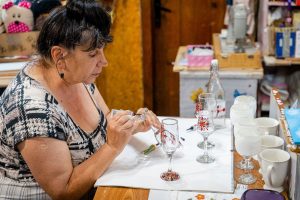
In the midst of the privacy, the calm and authentic atmosphere of the Renaissance, we will be welcomed by Stefka and Stanimir. Art teachers, they devote themselves to traditional Bulgarian crafts.
WOOL PROCESSING
‘’Plusti’’
The creation of ‘’ ’plusti’ ’objects from non-woven fabrics is a traditional Bulgarian craft. ‘’ ’Plusti’ ’is a non-woven fabric produced by matting, condensing and pressing wool fibers. Stefka will explain to us the needs of crafts, its evolution over the centuries, the materials and skills needed, as well as its application today.
Practical activity: Demonstration and making of a bracelet, brooch or earrings with “plusti”. The lesson can be individual or in a team.
BULGARIAN EMBROIDERY
‘’Shevitsa’’
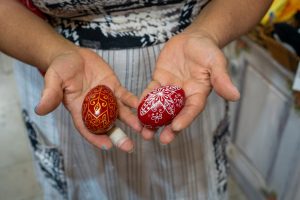
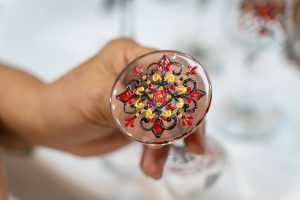
Stefka will explain the importance and application of ’Shevitsa’ in everyday Bulgarian life, followed by a more detailed explanation of its symbolism. The ’Shevitsa’ was an integral part of the Bulgarian national dress and lifestyle. Colorful and fascinatingly beautiful, it is a national value that preserves the memory of the people and tells their story through symbols and colors.
Practical activity:
Draw a ’Shevitsa’ ’on a wooden or ceramic tile with the appropriate tools.
The lesson can be individual or in a team.
Traditional Bulgarian costumes
Dance School “Byala Anasta”
Until about sixty years ago, the Bulgarian folk costume was a kind of identity document. Its distinctive characteristics clearly indicate from which region a person comes or even if he is married or not. The dots on the clothes were not only patterns, but ancient patterns passed down from generation to generation. Few people know how old this tradition is and Chris Kostov of “Byala Anasta” dance school will tell you about it.
Team game: Collect the folk costume sets from several regions correctly
Photos: Andrey Andreev Photography

Lovech 5500 / Bulgaria
N PK-01-8013
E-mail : info@karistour.com
Tel. +359 890 161 600


Leave a Reply